
Ore
搜索"Ore"找到部影视作品

导演:
主演:
剧情:
Annie just graduated college. As she falls into an aimless summer, she finds herself entangled with Tyler, a woman she meets at a bar and Danny, Tyler's co-worker or best friend or…? Annie can never tell. The film follows Annie through a summer of self-discovery as she, Tyler, and Danny each battle for unrequited connection, ultimately helping Annie find her voice in desire and independence.

导演:
主演:
剧情:
安德烈斯是一名在马德里工作的音乐老师,他不得不搬到巴斯克镇,在一所高中担任代课老师。他已经 40 多岁了,但一直没有克服舞台恐惧,他觉得新生活正在使他远离成为音乐家的梦想。当他到达那里时,在上学的第一天,他因为耳鸣而晕倒了:这是癌症。为了接受治疗,他必须乘坐“生命巴士”前往毕尔巴鄂的医院,这是一辆免费运送该地区所有患者的旧巴士。在与同伴分享的欢笑、坦白、经历和恐惧中,安德烈斯将获得力量,最终面对恐惧,实现登上舞台的梦想。

导演:
主演:
剧情:
Colombian music icon Juanes plays Moisés, the eldest of three brothers plying this perilous trade and the linchpin of the operation, while Alberto Guerra delivers a compelling performance as Ulises, a man paralyzed by conflicting decisions and haunted by fear and grief. When Juan (Alejandro Speitzer) — the youngest of the brothers — is coerced into working for a more powerful, rival criminal organization, the shocking underbelly of the business is laid bare and there are tragic consequences.



导演:
主演:
剧情:
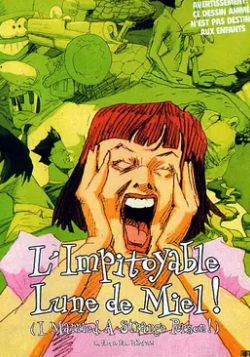
这部片可以是加了幽默的《Akira》,添了人情味的《RoadRunner》,动画版的《低俗小说》(Pulp Fiction)。一个关于一对新婚夫妇在新婚之夜发生的温馨故事。丈夫格兰特(Grant)突然得到奇异的超自然力量,与此同时妻子凯丽(Kerry)窘于应付。无论何时,只要Grant一想什么,就会变为现实,尽管他并不知道这些魔力来自哪里。他从此成为清谈节目的风云人物。拉森·扎尔斯(Larson Giles),笑笑公司(Smile Corp.)老总,一个Ted Turner型媒体巨头,派遣他的私家军团,由粗暴但无脑的菲古森(Ferguson)上校率领,去绑架格兰特,以便霸占全球媒体收视率。接下来就是电影史上最暴力和奇怪的对战之一。除了多个足以开罪所有人的极端暴力画面,还有曾被称为“电影中有史以来出现的最怪异和滑稽的性场面”。


剧情:
The Power of Emotion explains that emotion isn't to be confused with sentimentality. Emotion is ancient and more powerful than any art form. The film looks at young couples who run into difficulties as they try to translate their experiences of love into clear decision-making. A woman who has shot her husband provides a judge with a puzzle. Those who love can bring the dead back to life by means of co-operation. That's the focus of the opera, "The Power Plant of Emotions" and the "Opera of the 20th Century" cinema.
Alexander Kluge: The Power of Feeling
When I started working on The Power of Feeling, I was not in a rational state. I did not say, I have a subject and now I will make a film about it. Instead I was spellbound and observed in my direct surroundings, for example, how feelings move. I have not really dealt with the theme of my mother's death and the fact that she was the one who taught me "how feelings move." Nor have I dealt with how she died. That was an entire palette of feelings: "All feelings believe in a happy end," and everyone believes tacitly that they will live forever: The entire palette is somehow optimistic, a positive attitude towards life having been put on the agendaas long as she was young, as long as her body held out, from one day to the next she collapsed. She just suddenly collapsed, like in an opera where disaster takes the stage in the fifth act. It felt as if I had observed an air raid or a disaster.
The film The Power of Feeling is not about feelings, but rather their organization: how they can be organized by chance, through outside factors, murder, destiny; how they are organized, how they encounter the fortune they are seeking.What is all this organization of feelings about? Generally feelings tend to be a dictatorship. It is a dictatorship of the moment. The strong feeling I am having right now suppresses the others. For thoughts this would not be the case. One thought attracts others like a magnet. People therefore need affirmation by other people to be sure about their own feelings (to counteract the acquisition of their feelings through outside forces). Through the interaction of many people, for example, in public, the various feelings also have a magnetic attraction to one another just like thoughts do. Feelings communicate through their manifestation in public.
The cinema is the public seat of feelings in the 20th century. The organization is set up thusly: Even sad feelings have a happy outcome in the cinema. It is about finding comfort: In the 19th century the opera house was the home to feelings. An overwhelming majority of operas had a tragic end. You observed a victim.
I am convinced that there is a more adventuresome combination: Feelings in both the opera and traditional cinema are powerless in the face of destiny's might. In the 20th century feelings barricaded themselves behind this comfort, in the 19th century they entrenched themselves in the validity of the lethal seriousness.
Alexander Kluge: The Power of Feeling
When I started working on The Power of Feeling, I was not in a rational state. I did not say, I have a subject and now I will make a film about it. Instead I was spellbound and observed in my direct surroundings, for example, how feelings move. I have not really dealt with the theme of my mother's death and the fact that she was the one who taught me "how feelings move." Nor have I dealt with how she died. That was an entire palette of feelings: "All feelings believe in a happy end," and everyone believes tacitly that they will live forever: The entire palette is somehow optimistic, a positive attitude towards life having been put on the agendaas long as she was young, as long as her body held out, from one day to the next she collapsed. She just suddenly collapsed, like in an opera where disaster takes the stage in the fifth act. It felt as if I had observed an air raid or a disaster.
The film The Power of Feeling is not about feelings, but rather their organization: how they can be organized by chance, through outside factors, murder, destiny; how they are organized, how they encounter the fortune they are seeking.What is all this organization of feelings about? Generally feelings tend to be a dictatorship. It is a dictatorship of the moment. The strong feeling I am having right now suppresses the others. For thoughts this would not be the case. One thought attracts others like a magnet. People therefore need affirmation by other people to be sure about their own feelings (to counteract the acquisition of their feelings through outside forces). Through the interaction of many people, for example, in public, the various feelings also have a magnetic attraction to one another just like thoughts do. Feelings communicate through their manifestation in public.
The cinema is the public seat of feelings in the 20th century. The organization is set up thusly: Even sad feelings have a happy outcome in the cinema. It is about finding comfort: In the 19th century the opera house was the home to feelings. An overwhelming majority of operas had a tragic end. You observed a victim.
I am convinced that there is a more adventuresome combination: Feelings in both the opera and traditional cinema are powerless in the face of destiny's might. In the 20th century feelings barricaded themselves behind this comfort, in the 19th century they entrenched themselves in the validity of the lethal seriousness.